Tuesday, October 18, 2011

Does This Straitjacket Make Me Look Fat?

In my last post, I mentioned that one of the casualties in the barnyard this summer was Bull, my favorite sheep. It has taken me two months to mention this because the event cast me down to an extent which you probably wouldn’t believe, and which I really do not understand. He was a nice sheep and all, but he was a sheep. Losing him should not send a person into the kind of tailspin that, in fact, ensued.

In the third week of August, Bull started hanging around the barn instead of going out with the other sheep to graze. He may or may not have been acting a little strange weeks before; I remember seeing him standing alone for a long time inside the branches of a reclining apple tree, which is not a real sheep-like behavior. He had stopped coming to scarf up the cup of chicken feed I throw out the door of the Hen Room every morning for the entertainment of the grazing classes, but I assumed that that was because Joshua, the sheep with the stand-up horns, had taken to using those horns to, as the capitalists say, maximize marketshare. Still, Bull was acting fairly normal until one particular week when John went to Colorado to travel and work, and my parents came up and stayed with me and the children for a few days so we could visit and do fixer-upper projects together. That Thursday Bull started not leaving the barn much, and I saw him drinking water from the barrel, which is unusual—they seem to get most of their water from the grass they eat. But he wasn’t really eating. I stayed overnight with my college roommate and came home and Bull was still odd but no odder. Mom and Dad left on Saturday, and Bull ate a little strip of leftover grilled zucchini I gave him because it was slicked with olive oil, which I thought might help if he was plugged up inside. Sunday morning he was wider than the other sheep. He was always wider than the others, possibly because he was the greediest damn sheep in the world, but Sunday he was wider than usual. I went on the Internet and found advice involving the gargling of mineral oil by sheep with bloat. Juliette de Bairacli Levy, the great barnyard herbalist, counseled dill seed. I started thinking about the ice pick scene in Far From the Madding Crowd. But none of these remedies seemed possible without John there to restrain the sheep. And it was Sunday, when it seemed criminal to call Dr. Mike away from the family dinner table because my sheep had gas.

I guess I should have called. On Monday morning just before full daylight, I went to the barn to open the hen door and check on Bull before I darted off to serve breakfast at the B&B. He was lying in his usual spot along the wall, his head curled down alongside his flank. He was still warm. His eyes were closed. He looked for all the world like a sheep sound asleep.

After I laid out the coffee and juice and cereal and pastry at the Inn, I called my friends on the next hill. Bill understands tractors, and was willing to come dig a hole for me. The kids helped me drag Bull out of the barn and into the tractor scoop. We buried him down near Dermott and Sterling and Dolly Madison, the turkey. Phyllida put some goldenrod in the grave. Everybody got poison ivy.

All the rest of that day, I couldn’t stop crying. Pretty soon little whispery voices in my head started making accusations about care that could have been given, actions that could have been taken, choices that could have been made that would have saved that sheep. The rational assertions of my friends—that Bull had lived about six times longer than sheep normally get to live, that he had had a really nice life, that he was a sheep, for God’s sake—had no effect. By Thursday, the little voice had turned from angry to vicious. Sheep killer, it whispered. Sheep killer. It wasn’t this bad when I had to send Rocco, the fourth lamb, to the slaughterhouse because he had become violent. This time, the little voice was carrying a torch and a pitchfork, and you could tell that after dark there was going to be trouble.

This worried me enough to call in the Cavalry. I told my friend Paula in Vermont what the little voice was doing. Paula ordered me to tell the little voice that if it said another word on the subject of sheep, now or ever, she would come down here, and it would be sorry. She meant it. Don’t push her.

That was it. Like all bullies confronted by a person of courage, the little voice shut up. I started feeling a little better and sleeping at night. On the weekend I told more people what had happened. My friend John, who has spent a good deal of time in Ireland, said, “He might have had that thing sheep get where their stomach flips over and there’s nothing you can do to save them.” It had never occurred to me that maybe there was nothing I could have done.

Seven or eight weeks went by. I wondered why I was not writing about Bull. Then at the feed store I ran into my friend Margaret, who sold me the lambs three years ago and maintains her own large flock. She is so sensible she actually eats some of her sheep, and sells them to other people to eat. Margaret is wise and good, and as I confessed to her what had happened, how I had taken one of her lambs and heedlessly thrown it away, I watched her reaction. She stood with her hands in her jeans pockets, tapping her Muck shoe, which was held together with duct tape. When I finished speaking, she gently shrugged thin shoulders under her ever-present flannel shirt. “You do what you can for them,” she said. “But the time comes when only they can decide whether or not they are going to live.” She added, “He probably ate something bad.”

I am not ready to exonerate myself of this sheep’s death. But it does occur to me that Bull was the greediest sheep alive, and if he did in fact eat himself to death, there is a metaphorical elegance in that which I think reflects the deep structure of the universe. I believe in that structure, and I believe you can read the fitness of an event—how necessary it was—by how fully it conforms to the deep elegance. So while I am not yet ready to get down off the cover of the Autumn 2011 Triple Harvest Issue of Bad Farmer magazine, it is possible that I was a bystander at the wreck of this hay train, and not the one who blew up the tracks.

Tuesday, October 11, 2011

Dead or Broody?

Back in the day when I was in college and MTV was the coolest thing anyone had ever seen, we used to wile away the time between study groups playing Dead or Canadian? This week at Wren Cottage, we are updating that game for the 21st century farm with the action packed puzzler Dead or Broody?

I guess the photo gives away this week’s answer.

One of the black hens, the youngest, spryest, egg-producingest part of our flock, went broody early last week. This is not the most convenient time of year to have tiny defenseless infants, but what the hell. It’s her life.

I have been leaving for work before daylight lately, so the chickens get fed in darkness, and the few eggs that are still being laid are collected in darkness, by feel. A day or two after the hen went broody, I was feeling around for eggs and accidentally jammed my hand into the broody girl’s back. I apologized. But the next day I had the chance to visit the barn in broad daylight, so I thought I would do some visual recon on the mother-to-be. And guess what? I guessed wrong. Not broody. Dead.

At least her eyes were shut. I hate when creatures die with their eyes open and then they get dirt in them. Who wants dirt in their dead eyes? When my favorite sheep, Bull, died this summer, he died in his sleep, his head curled gracefully down to the hay bedding and his eyes closed as though in repose. Ditto the black hen. I am a tiny little bit tired of my animals dropping dead this year. But I am glad that none of them have been smashed open, and their eyes were all shut.

Wednesday, August 10, 2011

White People Get Stranger & Stranger

I have always loved that line from The Brother From Another Planet, and today I am it.

These are four fleeces from my Jacob sheep, drying on the roof of our house. I went to skirt them yesterday to send to the carding mill, and lo! They were soaking wet! Because in what was admittedly not my finest hour as a logician, I laid the fleeces on a tarp in the garage after shearing…right over top of the floor drain. In which location they got soaked by the very many, many torrential rains we have received this summer. A-doi.

The roof was so hot it was burning my feet, so I hope I am today redeeming my reputation for solutions crafted using just what’s available in the Magic Cellar. With better attention to detail than I displayed in June, we will hopefully toast the fleeces just enough to be perfectly dry and not so much that they get all brittle and unspinnable.

And P.S. Happy Birthday, Eileen Flanagan!

Sunday, July 17, 2011

Rosefugee Camp

My friend and gardening role model, Rodrica Tilley, she of the amazing paintings, many of which have depicted the citizens of her garden in Montrose, PA, is moving away to Vermont, where her gardens will be smaller and less sunny. She has generously given me lots of cool plants over the years, and now a set of potted roses (including the tea rose ‘Inkspot’ pictured here) which never made it into the ground, and which are not making the move to New England. Even though I JUST finished swearing that I was done expanding my perennial beds because I want to have time some day to hike and kayak and so forth in the summer, I am choosing spots for these new roses, and since the existing beds are crammed beyond full, some of these pioneers are venturing forth into new parts of the property, like the orchards. I see no reason why a rose should not be happy as part of the brush island around the base of an old apple tree.

In addition to the bougthen roses in my rosefugee camp, there is also a piece of the rugged old thing that grew over Rosebush Cottage, the decommissioned chicken coop Roddy used as her girlhood playhouse. This rambler is renowned for its insouciance, fragrant pink blossoms and complete indifference to neglect. I am so touched to have a piece of this lovely and historic rose; Rodrica just explained to me that when old rose people come upon a plant they cannot readily identify, they give it a working title until its true identity comes out; hence my new plant is named Rosebush Cottage, and probably always will be, even if we find out what genetics it has, because whatever its original name, it cannot be as charming. I am going to plant Rosebush Cottage next to the self-sown sweetbriar in the North Orchard beside which I intend to build my little writing room some day, and in whose dooryard I intend to have my ashes planted at some even later date. The fact that the garden is preceding the building may be the cart before the horse, but in this case it means that from the very first day it is inhabited, Orchard House will have an excellent rose garden.

Saturday, May 21, 2011

Dept. of If That Don’t Beat All

At 6:04 ET this evening it came to my attention that the RaptureMobile had failed to pick me up on its way out of town. However, ten minutes later, when I went to fill a pan with a little water for this strange old Dominique hen who’s been hanging around the birdfeeder/front door all by herself lately, it became apparent why even a hanging strap on the mass transit to the afterlife would be thrown away on me.

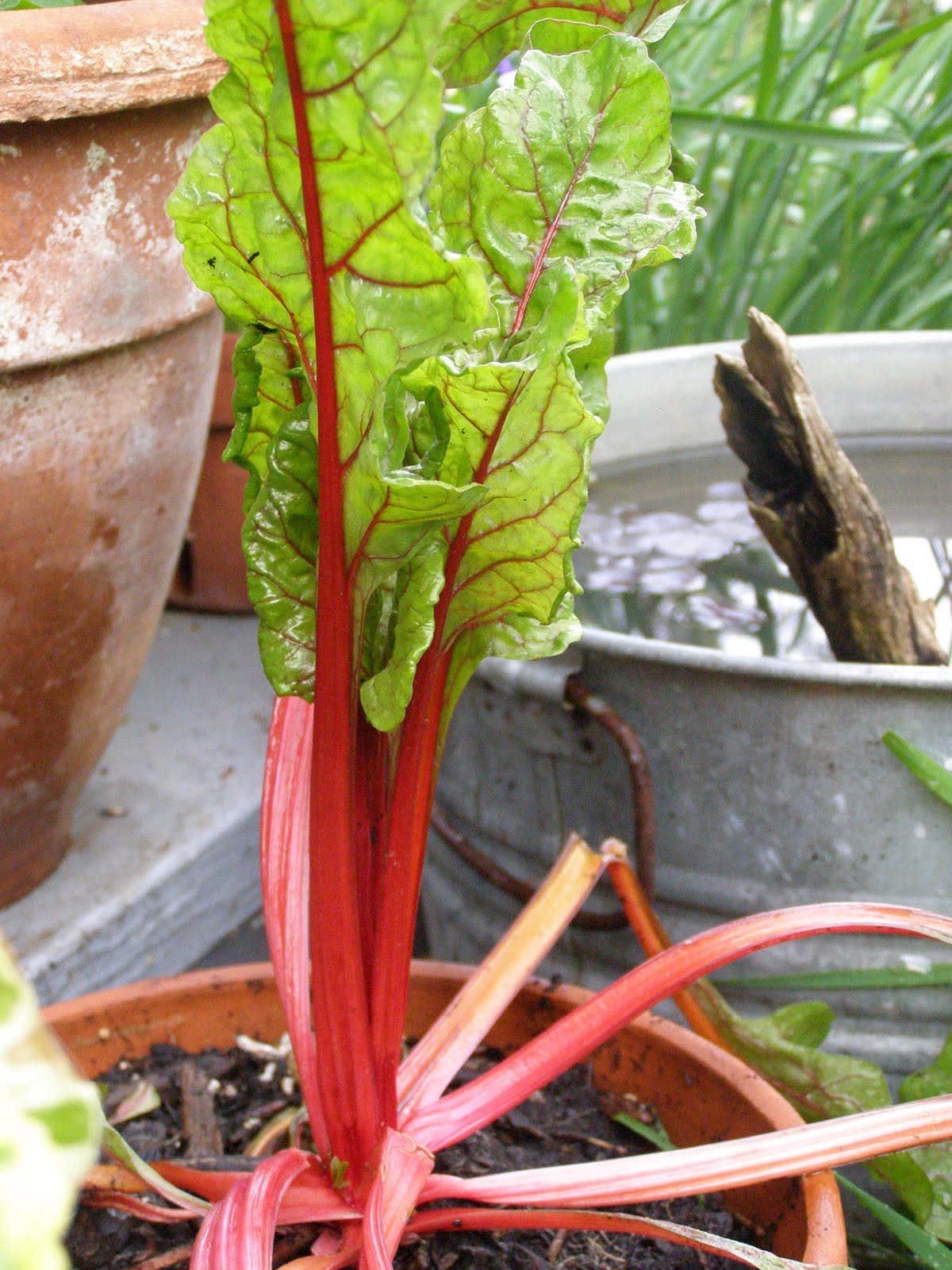
I had been gardening for three hours or so, and was totally covered with mud, so instead of tracking through the house I used the garden hose, set to a fairly pitiful trickling spray, to put an inch of water in an enamel pan that was standing around near the odd hen. And while I was at it, I thought I would just water the potted plants on the porch stairs, since it hadn’t rained in at least six hours, and they have gotten used to drenching storms every twenty minutes. So while I am watering the red chard plant that overwintered in the cold frame and now graces the front steps, a male ruby throated hummingbird came twittering over, hung like a sign from God on the very edge of the spray from my hose, and then alighted on a chard leaf to sip the water that was running down the stem. Having given this astonishing performance, he moved off to a rose cane nearby to swipe his bill clean.

When my amazed eyes lifted from this sight, there were woodpeckers of two different species hugging the pole of the birdfeeder across the drive, and three other kinds of perching birds in the hedgerow behind. At this point I decided that I, like the old lady who lived here before me, would prefer to stay at Woodbourne for some unspecified period of time than spend eternity in a country where there are no dogs or songbirds.

Tuesday, May 10, 2011

Sterling Marlin, RIP

Late this afternoon I heard a strange repeated cat cry, which led me to the East Orchard, where Sterling, my very white cat, was lying on the very green grass, his pupils slitted with pain, his tongue and gums not so red as they should have been. It was obvious that whatever it was was really bad, so I scooped him in a towel and rushed him to the vet five minutes away. He died on the way in.

Sterling was coming up on his fourth birthday. We don’t know the exact date because we got him when he was about six months old. He had moved out of the barn where he was born and was living under a pull-behind camper in a machine shed a mile or two from here. A nice older gentleman was living in the camper, feeding Sterling venison burgers and cans of tuna, but he was going in for hip surgery soon, and Sterling would not be able to go with him. The gentleman saw my poster for a lost cat and called me from the pay phone at the gas station. He said, “I don’t have your cat, but I have another little one you might like.”

I did like him. He had a funny double-strike meow, and he got to be great friends with the other junior cat in our extensive pride. That fellow, John-Paul, looked on in great concern as Sterling lay crying in the field, and had to be shooed out of the way as we rushed off to the vet. Of us all, I feel the worst for him.

Saturday, April 9, 2011

As The Hen Turns, Episode 804,566

We have two chickens left from our first batch seven years ago, a New Hampshire Red named Prudence and a white and gold Auracana called Marisol. Marisol is the only one who has been on our farm that whole time, because Prudence was part of the fifteen reds I raised for my friend Maggie, who wanted new chickens that year but her daughter was getting married that spring, so having a roomful of dusty peeps in the house was out of the question. So I raised the reds the first few weeks and handed them off to Maggie after the wedding, and a few days later, my own flock of 10 or 12 assorted birds was attacked first by an opposum and a few days later by a roving dog. There were only 2 survivors, Marisol and one of the reds I had kept, whose leg the dog had broken. I knew I should wring her neck and be done with it, but I couldn’t bear to, and miraculously by the following week she was walking again. Maggie gave me back two red chicks to console me, so we had Prudence, Constance, Capability the miracle bird and Marisol. Over the years Capability died and Constance was carried off by the wildlife but Prudence and Marisol have endured. Marisol is very friendly and curious and likes to come into the kitchen and hang out with the human flock, so she became everyone’s favorite chicken. She even has fans in other states.

All the chickens except Marisol had started going out of the barn again now that it is kinda sorta grudgingly spring. Yesterday was pretty nice out, so I went and caught Marisol where she was hanging out in a nest box in the Hen Room, no doubt eating eggs, and I put her out with the other birds. She went straight back indoors. I went and got her and carried her halfway down the barnyard. She pecked around a bit on the ground; as soon as I started for the house, she sprinted for the barn door. I rolled my eyes and decided to leave her to it. As I went through the barnyard gate, she disappeared around the corner of the barn.

But at bedtime when I was locking up, glancing over the roosting hens as always, there was no Marisol. I looked again, harder. No hen. Marisol was gone. Somehow in the three feet between the corner of the barn and the barn door, something had swooped down and nabbed her, and I didn’t even hear it happening. This is what you get, I told myself, for meddling with Nature. You don’t know how things are, you don’t know what’s going on, you think you understand everything and know best but you don’t, and now, because of your arrogance, everyone’s favorite chicken, the venerable Marisol, is dead. In spite of this cheerful assessment, that little part inside me that refuses to ever see reason was crossing its fingers that she might come back, because there was no corpse and no explosion of feathers on the ground.

This morning when I went into the Hen Room, Marisol emerged laboriously from inside the wall where she had hidden all night. Why was she in the wall? I have no idea. She is not broody. She went out into the barnyard today with the rest of the chickens, as though winter had never happened and this is just what we do every day all year, and we never think of a quick run back to the barn to hide in the darkness and eat eggs. Maybe she has chicken senility. In any event, I am glad that her blood is not on my hands.